3rd Week : Field trip to IIUM Gallery.
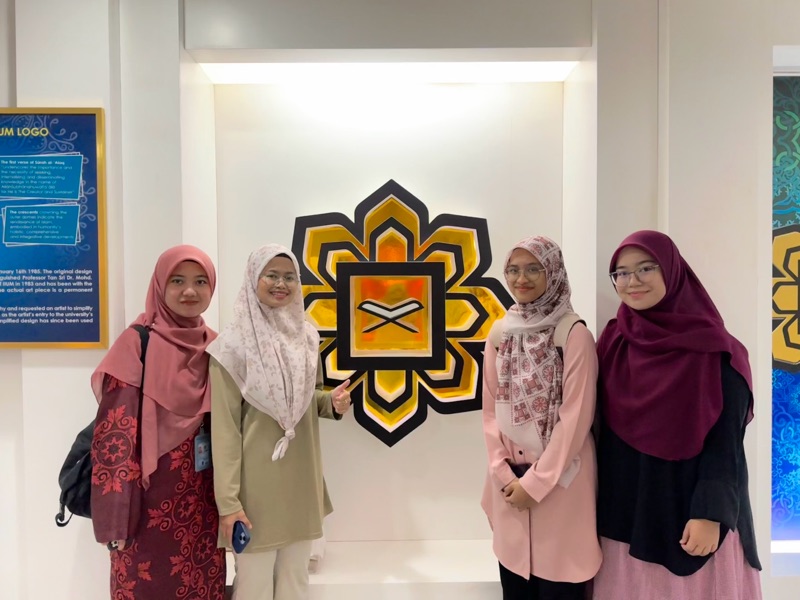
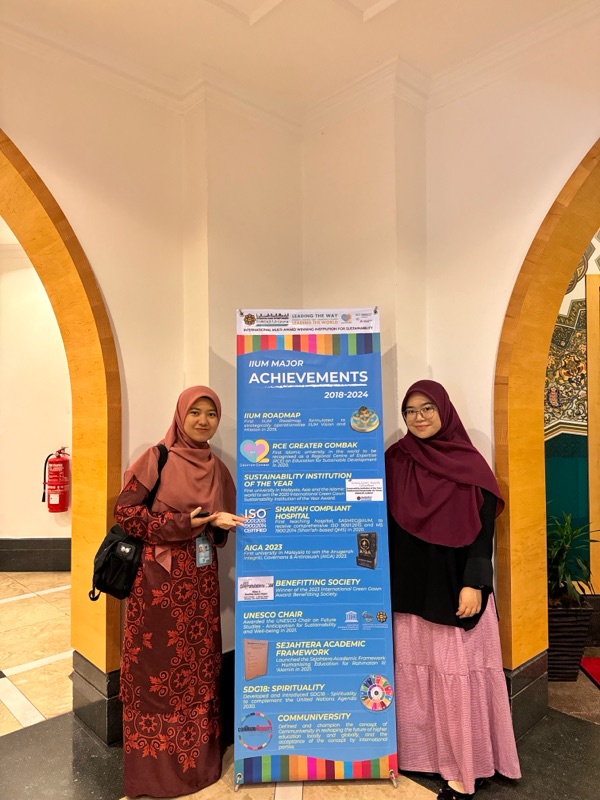
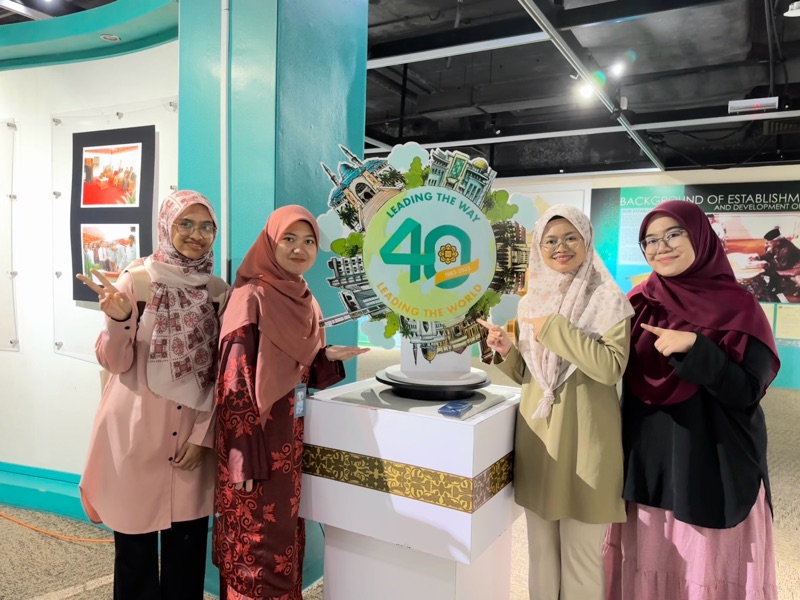
For this week's lecture, Sir Suhaimi had assigned the students of SCSH 1201 Section 1 to go to IIUM Gallery and do some exciting observations about Maqasid Shariah and Sustainable Development.
As we are living in this prevailing era, all people around the world want the best life and future in their life ahead, all those advanced technology, skyscraper buildings, greenery scenery or environment, and an adequate source of food for all kinds of living. But have we ever wondered that in order to achieve all those dreams and desires , there are some sacrifices that must be done and some consequences must be taken for all parties.
Since we are focusing on the SDG and Maqasid Shariah elements, here are some observations related to both of them during our visit to IIUM Gallery.
1. Maqasid Shariah focuses on the protection of life and property extends to the well-being of the environment, as natural resources are crucial for sustaining human life. Environmental Sustainability aligns with the Islamic principle of Khalifah over the Earth. Islamic teachings encourage the protection of the environment, conservation of resources, balanced living, directly supporting efforts to combat climate change.
2. When we visit the IIUM Gallery, the second thing that strikes us is the Sejahtera Academic Framework, which IIUM created to produce balanced graduate students by teaching them not only academic subjects but also how to link with Islamic maqasid shariah. This IIUM concept also seeks to fulfil SDG 18, which is spirituality, so it's like killing two birds with one stone.
In this Sejahtera Academic Framework, by using humanizing education, students learn to know, to do things, to live together with community, to be, and to become someone successful. Alongside the Islamic environment (bi’ah solehah) that is a nature of IIUM, the university also provides services in the areas of education, social aspects, facilities, and student support for the well-being of students.
Among the core subjects offered by IIUM which compulsory to take by all students are UNGS that provide a deeper understanding of Islam, leadership and family management that pertains to lineage, usrah in action and sustainable development, and other skills courses that attempt to connect students with Islamic maqasid shariah and sustainable development.
3. The third observation we got from today’s visit is the institutionalisation of sustainability in our campus. A big realization hit us that if the campus did not integrate SDG and SDG Programs into courses, we might not care as much about Sustainable Development as a whole. Even if it’s not the SCSH courses, we are instructed to insert how the topic relates to SDG. This opens our eyes to view the subject from another focal point, aside from the Islamic point of view. Through this, we feel thankful that the institution we are in caters to the sustainability mission which also aligns with Maqasid Shariah. Promoting the sustainable campus concept confirms all 5 Maqasid Shariah.
As an example:
Hifz al Nafs - The quality of life on campus will increase if more preservation efforts are continuous. Life could be the life of humans, plants and the animals around us. This was evident during river clean up efforts and cycling lane initiative to reduce cars in the campus.
4. Maqasid Shariah relates to five things for human well-being and development; protection of faith, protection of life/body, protection of reason/intellect, protection of posterity/lineage and protection of property/wealth.
Islamic Law governs these five essentials: Fiqh al-Ibadat (personal law), Fiqh al-Munakahat (family law), Fiqh al-Muamalat (societal law), and Fiqh al-Jinayat (criminal law). They are classified into three types: Dharuriyyat (necessities), Hajiyyat (supplements), and Tahsiniyyat (embellishments). Maqasid Daruriyyat refers to items that are vital to human existence and provide their basic needs. If this craving is not satisfied, their lives will be ruined. Religion, life, intelligence, ancestry, and property are the fundamentals. Maqasid Hajiyyat, or human necessities that allow people to live simple and comfortable lives. Without it, people's lives are chaotic and fraught with difficulties. Solat Jamak Qasar is one example of such a case. According to Maqasid Tahsiniyyat, these are the supplementary and complementary essentials that help people live more comfortably and orderly lives.
Week 3


Good information👍🏻
ReplyDeleteimplementation on sustainable development goals in our university certainly a good choice as it makes us more aware about issues worldwide
ReplyDeleteGood sharing
ReplyDeleteIIUM Gallery is full of meaningful histories and educational infos on SDG.
ReplyDeleteGood info❤️
ReplyDeleteINFORMATIVE!
ReplyDeleteamazing
ReplyDeleteHighly valuable information!
ReplyDeleteVery insightful
ReplyDelete